Leave Your Message
Discover our top-tier selection of precision-engineered cutting tools, designed to elevate your woodworking projects from standard DIY to professional mastery.
The global market for a home saw for woodworking projects has witnessed an unprecedented transformation over the last decade. Historically, there was a stark divide between industrial-grade machinery used in large-scale furniture manufacturing and the rudimentary hand tools available to the average home DIY enthusiast. Today, that gap has rapidly closed. The commercial landscape is now dominated by high-performance, compact, and highly efficient cutting tools that bring factory-level precision directly into the residential garage or small-scale workshop. This democratization of quality is largely driven by advancements in metallurgical engineering and automated manufacturing processes.
In the industrial sector, the demand for efficiency, durability, and multi-material compatibility has pushed manufacturers to innovate continuously. The modern home saw for woodworking projects is no longer just a simple steel blade. It is a sophisticated piece of engineering, often incorporating M42 Bi-Metal compositions, Tungsten Carbide Tipped (TCT) teeth, and vacuum brazed diamond technologies. These materials, once reserved exclusively for heavy-duty aerospace or automotive manufacturing, are now standard in premium woodworking kits. The commercial viability of these advanced tools has skyrocketed as more consumers engage in complex home renovations, bespoke furniture making, and intricate interior decoration tasks.
Furthermore, the development trends indicate a massive shift towards modularity and universal compatibility. Modern hole saws and drill bits are designed with quick-release hex shanks and universal arbors, ensuring they can seamlessly integrate with a wide variety of power drills and drill presses. This interoperability not only enhances user convenience but also reduces the overall cost of entry for hobbyists looking to build a comprehensive toolkit. The economic impact is profound: as high-quality tools become more accessible, the DIY woodworking community expands, driving further commercial demand for specialized, niche cutting solutions such as Forstner bits for hinge boring and deep-cut bi-metal saws for structural framing.
To truly understand the value of a high-quality home saw for woodworking projects, one must look at the underlying technology. The manufacturing of these tools has integrated AI-driven design protocols, automated laser welding, and precision CNC grinding. These tech-forward approaches ensure that every single tooth on a hole saw is perfectly pitched and angled to optimize cutting speed while minimizing heat generation and material tear-out.
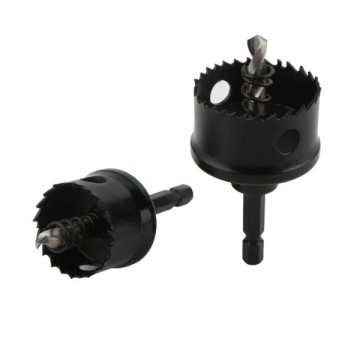
By electron-beam welding an edge of high-speed steel containing 8% cobalt to a tough spring steel backer, M42 Bi-Metal hole saws offer unparalleled wear resistance. This technology ensures the saw maintains its sharpness even when cutting through dense hardwoods, engineered woods, or occasionally encountering hidden nails.
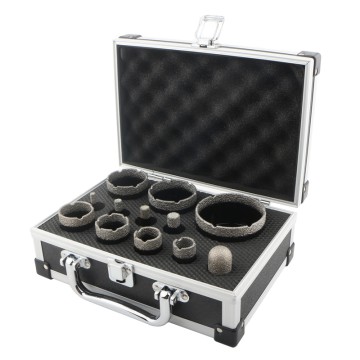
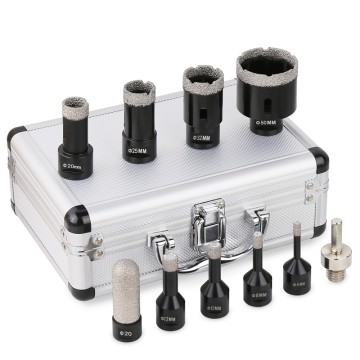
Originally designed for masonry and tile, vacuum brazed diamond hole saws are increasingly finding their way into advanced woodworking, especially when dealing with ultra-hard composite materials, laminates, and resin-infused woods. The brazing process firmly anchors the diamond grit, providing a smooth, chip-free finish.
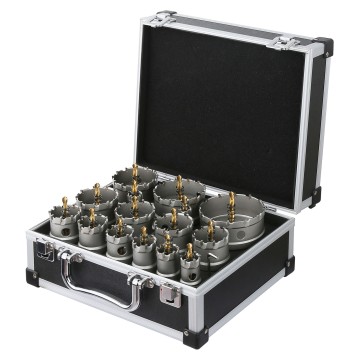
TCT hole saws are the heavy lifters of the woodworking world. The extreme hardness of the tungsten carbide teeth allows for aggressive cutting speeds and a significantly longer lifespan compared to standard carbon steel. They are highly effective for thick lumbers and abrasive wood materials.
Modern manufacturers utilize artificial intelligence to simulate cutting dynamics, optimizing the pitch, gullet depth, and set angle of the saw teeth. This AI-driven geometry drastically reduces vibration, improves chip clearance, and ensures a perfectly cylindrical cut every time.
The versatility of a home saw for woodworking projects extends far beyond simple crosscuts or rip cuts. When we examine the specific applications of hole saws, Forstner bits, and specialized drill bits, the breadth of possibilities becomes apparent. These tools are the backbone of both aesthetic and structural woodworking tasks.
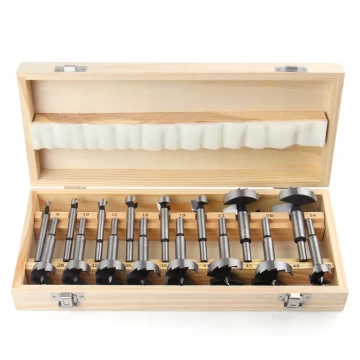
In custom cabinetry, precision is non-negotiable. High Carbon Steel Forstner tips are indispensable for boring flat-bottomed holes required for European-style concealed hinges. Unlike standard twist drills, a Forstner bit shears the wood fibers cleanly at the perimeter before clearing the center, resulting in a flawless hole with no splintering. This is crucial when working with expensive veneers or melamine-faced chipboards. Furthermore, bi-metal hole saws are frequently used to create perfect grommet holes for cable management in office desks and entertainment centers.
Interior decorators and millworkers rely heavily on TCT and Bi-Metal hole saws for installing recessed lighting, HVAC vents, and decorative wooden inlays. The ability to cut clean, large-diameter holes through drywall, plywood, and solid wood trim without damaging the surrounding material is a hallmark of a premium cutting tool. The thin-wall design of modern hex shank M42 saws reduces the cutting friction, allowing battery-operated power tools to perform more cuts per charge, which is highly beneficial on active job sites.
While primarily considered a woodworking tool, the robust nature of modern hole saws allows them to cross over into structural and utility installations. When framing a house, electricians and plumbers must route pipes and cables through wooden joists and studs. Using a high-quality TCT or M42 hole saw ensures that these penetrations are made quickly and cleanly, maintaining the structural integrity of the timber. This cross-industry application highlights why investing in industrial-grade tools for home projects is a wise decision.
Selecting the right home saw for woodworking projects requires an understanding of the material you intend to cut and the specific outcome you desire. For general woodworking, softwoods, and standard plywood, a high-quality M42 Bi-Metal hole saw offers the best balance of speed, cost, and durability. If your projects involve dense hardwoods like oak or maple, or engineered materials like MDF and particleboard, stepping up to a TCT (Tungsten Carbide Tipped) hole saw kit will save you time and prevent tool burnout.
Maintenance Protocols: Even the most advanced AI-engineered tools require proper maintenance to ensure longevity. Heat is the primary enemy of any cutting tool. When using a hole saw, especially in deep wood cuts, it is vital to clear the sawdust frequently. Sawdust acts as an insulator, trapping heat against the blade, which can ruin the temper of the steel and scorch your wood. Utilizing a "peck drilling" technique—applying pressure for a few seconds, then withdrawing the saw slightly to clear the chips—can dramatically extend the life of your tool.
Furthermore, inspecting the pilot drill bit (the central bit that guides the hole saw) is crucial. A dull pilot bit will cause the saw to wander, resulting in an inaccurate and potentially dangerous cut. Always ensure the pilot bit is sharp and securely fastened in the arbor. After use, cleaning the saw teeth with a stiff brush and applying a light coat of machine oil will prevent oxidation and keep your tools in pristine condition, ready for your next ambitious woodworking project.
Explore our full range of professional-grade hole saws and drill bits. Whether you are a DIY enthusiast or an industrial contractor, our meticulously crafted tools guarantee exceptional performance and reliability.