Leave Your Message
Kazakhstan, geographically positioned as the heart of Central Asia, is currently experiencing an unprecedented industrial and economic renaissance. As the largest economy in the region, its rapid development is heavily fueled by vast reserves of natural resources, strategic geopolitical positioning, and ambitious state-led modernization programs. The country is a crucial node in the transcontinental Belt and Road Initiative, facilitating massive infrastructure projects, logistics hubs, and industrial zones. This booming macroeconomic landscape has generated an immense demand for high-quality, durable, and precision-engineered industrial tools. Among these essential components, saw arbors, diamond hole saws, and advanced drill bits stand out as critical elements required for heavy-duty construction, complex metallurgical processes, and resource extraction.
The role of a reliable saw arbor cannot be understated in these high-stakes environments. A saw arbor acts as the central spindle or mounting point for various cutting blades and hole saws, transferring torque from the power tool to the cutting edge. In Kazakhstan's demanding industrial sectors, where machinery operates under intense pressure and extreme environmental conditions, the structural integrity of a saw arbor dictates the safety, efficiency, and precision of the entire operation. Manufacturers and suppliers providing these tools to the Kazakh market must adhere to stringent quality standards, ensuring their products can withstand high rotational speeds, resist metal fatigue, and deliver flawless performance.
The mining sector is the backbone of Kazakhstan's industrial output. Cities like Karaganda and Ekibastuz are globally recognized for their massive coal, copper, and uranium extraction operations. In these subterranean and open-pit environments, heavy machinery requires constant maintenance, modification, and repair. Saw arbors and heavy-duty M42 Bi-Metal hole saws are deployed daily to drill through thick steel plates, reinforced equipment chassis, and ventilation pipelines. The arbors used here must feature advanced anti-vibration technologies and high-tensile steel construction to prevent snapping under the immense torque generated by industrial rotary hammers and core drills. High-speed steel (HSS) and Tungsten Carbide Tipped (TCT) hole saws, securely fastened by precision arbors, are critical for minimizing downtime and ensuring the continuous operation of mining conveyor systems and extraction machinery.
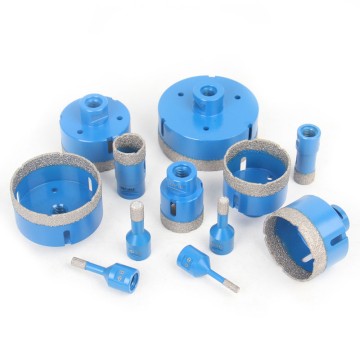
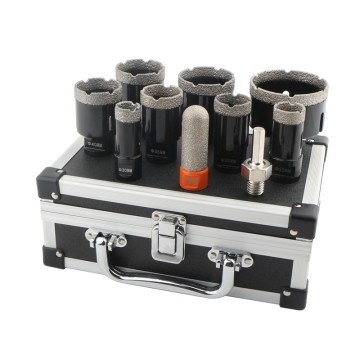
In western Kazakhstan, regions such as Atyrau and the Mangystau Province host some of the world's largest oil and gas fields, including Tengiz and Kashagan. The infrastructure required to extract, process, and transport petrochemicals is incredibly complex. Pipeline construction and maintenance demand tools that can cut through high-grade, corrosion-resistant alloys without creating excessive heat that could alter the metal's properties or ignite flammable gases. Vacuum brazed diamond hole saws, coupled with heavy-duty arbor adapters, are the industry standard here. These tools provide clean, precise circular cuts for valve installations, sensor placements, and pipeline branching. The arbors must offer a seamless, wobble-free connection to guarantee that the diamond grit engages the metal uniformly, extending the life of the hole saw and ensuring a perfect seal for high-pressure fluid transportation.
The architectural landscape of Kazakhstan is evolving rapidly. Astana (Nur-Sultan) is known for its futuristic, glass-and-steel modern architecture, requiring precise drilling through composite materials, aluminum facades, and engineered structural beams. Conversely, Almaty, situated in a highly active seismic zone, focuses heavily on earthquake-resistant construction and the retrofitting of older concrete structures. In Almaty, contractors rely on robust saw arbors and diamond core dry/wet drill bits to penetrate heavily reinforced concrete without causing micro-fractures in the surrounding structure. The precision of the arbor ensures that the hole saw maintains a perfect trajectory, avoiding structural compromise. Whether installing HVAC systems, electrical conduits, or reinforcing steel tie-rods, the reliability of the saw arbor is paramount to the safety of Kazakhstan's urban infrastructure.
One of the most unique challenges of operating in Kazakhstan is its extreme continental climate. Temperatures can plummet to -40°C in the northern winters and soar above +40°C in the southern summers. Such drastic temperature fluctuations cause significant thermal expansion and contraction in metals. Standard saw arbors and cutting tools can suffer from severe metal fatigue, brittleness in the cold, and overheating during summer operations. To combat this, leading manufacturers are utilizing advanced metallurgical processes, such as cryogenic treatment and specialized titanium or carbide coatings. These localized adaptations ensure that the saw arbors maintain their structural integrity and flexibility regardless of the harsh Kazakhstani weather, providing reliable performance year-round.
Furthermore, the manufacturing of these industrial tools is undergoing a technological revolution driven by Artificial Intelligence (AI) and smart manufacturing. Modern saw arbors are no longer simply cast and milled; they are designed using AI-driven generative design software that optimizes the geometry for maximum strength-to-weight ratios. Computer Numerical Control (CNC) machines, integrated with IoT (Internet of Things) sensors, manufacture these arbors with microscopic precision. In the context of the Kazakhstan market, this means predictive maintenance is becoming a reality. Smart factories can ensure that every batch of vacuum-brazed diamond hole saws and arbor adapters shipped to Central Asia possesses identical, flawless tolerances, drastically reducing the risk of tool failure in critical infrastructure projects.
Choosing the right manufacturing partner is vital for industrial distributors and project managers in Kazakhstan. Thanks to the seamless logistics networks established by the Belt and Road Initiative, particularly the Khorgos Gateway on the Sino-Kazakh border, the importation of high-grade saw arbors and cutting tools has never been more efficient. Heyida Tool Factory leverages these advanced logistics corridors to ensure rapid delivery times to major hubs like Almaty, Astana, and Shymkent. This strategic supply chain advantage minimizes inventory holding costs for local distributors and ensures that massive industrial projects are not delayed by tool shortages.
Beyond logistics, successful market penetration in Central Asia requires a deep commitment to localized after-sales support. Understanding the specific technical requirements of Kazakhstan's industrial standards (GOST and SNiP), our engineering teams collaborate closely with local contractors to provide customized tooling solutions. Whether it's adjusting the thread specifications of an M22 arbor adapter to fit regional power tools or optimizing the diamond grit concentration for drilling the specific aggregate found in Kazakhstani concrete, our dedication to "professional focus, quality wins" ensures that every product delivers unparalleled value. We are committed to forging lasting partnerships and driving the industrial success of Kazakhstan.