Leave Your Message
Discover our top-tier hole saws and drill bits engineered for optimal cutting speed and durability in demanding industrial environments.
Vietnam has rapidly emerged as one of the most dynamic and fastest-growing economies in Southeast Asia. Over the past decade, the country has successfully transitioned into a global manufacturing hub, attracting massive Foreign Direct Investment (FDI) from multinational corporations. This industrial renaissance has triggered an unprecedented boom in sectors such as construction, shipbuilding, automotive manufacturing, and precision engineering. Consequently, the demand for high-performance industrial tools—specifically those optimized for exceptional saw speed and durability—has skyrocketed.
In the context of industrial machining and construction, "saw speed" refers to the optimal rotational velocity (Revolutions Per Minute, or RPM) and feed rate at which a hole saw or drill bit operates. Achieving the correct saw speed is critical; it ensures clean cuts, prevents material deformation, and significantly extends the lifespan of the tool. For Vietnamese contractors and manufacturers working under tight deadlines and high-volume production quotas, investing in top-tier hole saws that can sustain high operational speeds without compromising precision is no longer optional—it is an absolute necessity.
High-speed hole saws reduce cycle times in CNC machining and manual drilling, directly boosting output in Vietnam's busy industrial parks.
Tools engineered for optimal RPM withstand the tough reinforced concrete and masonry common in Ho Chi Minh City's high-rise developments.
Integration of AI-driven CNC machines requires precision tools that can adapt to variable saw speeds without overheating.
The diverse geography and economic zoning of Vietnam mean that cutting tools and saw speed requirements vary significantly from region to region. Understanding these localized application scenarios helps manufacturers and suppliers deliver the exact specifications required by local industries.
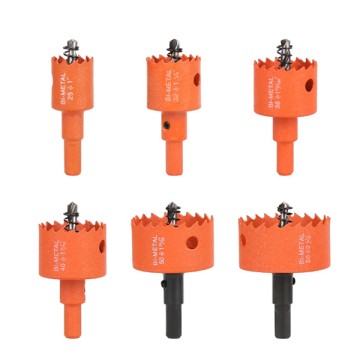
Located in northern Vietnam, Hai Phong is a critical hub for shipbuilding and heavy maritime industries. Constructing cargo ships and marine vessels involves drilling through thick, high-tensile steel plates. In this environment, M42 HSS Bi-Metal hole saws are the industry standard. The saw speed must be carefully calibrated—typically operating at a lower RPM but with a high torque—to cut through tough alloys without burning out the teeth. High-quality bi-metal tools ensure that shipbuilders can maintain steady saw speeds, reducing downtime required for tool changes.
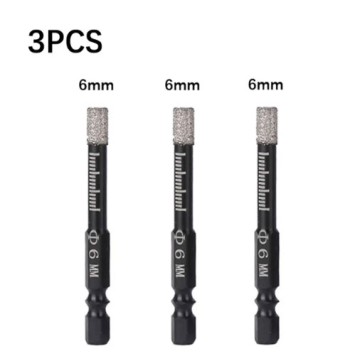
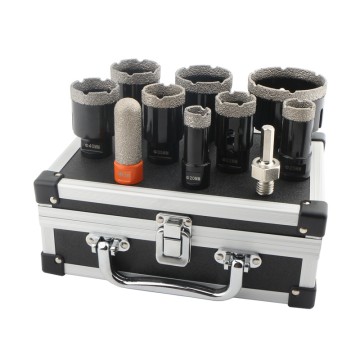
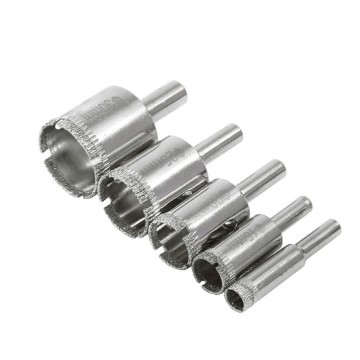
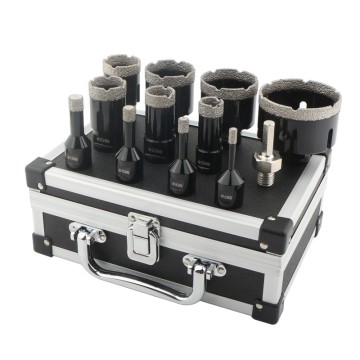
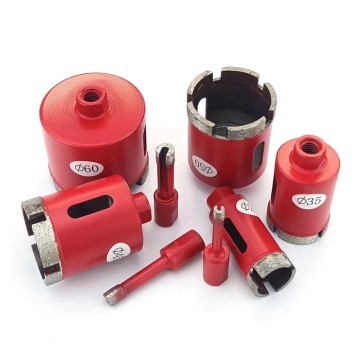
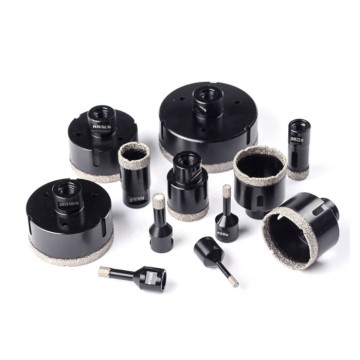
The skylines of Ho Chi Minh City and Hanoi are constantly evolving with new commercial skyscrapers, residential complexes, and metro line projects. This construction boom heavily relies on vacuum brazed diamond hole saws and sintering core bits. When drilling through reinforced concrete, ceramic tiles, or glass, operators need tools that can handle high rotational speeds while effectively dissipating heat. Diamond hole saws allow for aggressive saw speeds in masonry applications, ensuring clean, fracture-free holes essential for modern architectural aesthetics and structural integrity.
Binh Duong province is renowned globally as a powerhouse for furniture manufacturing. Here, precision and aesthetics are paramount. TCT (Tungsten Carbide Tipped) hole saws and specialized woodworking drill bits are highly sought after. In woodworking, maintaining a high saw speed is crucial to prevent the wood from burning or splintering. Vietnamese furniture factories utilize automated drilling machines where the saw speed is digitally controlled to ensure a flawless finish on hardwoods and engineered wood products.
To meet the rigorous demands of Vietnam's industrial and construction sectors, local enterprises partner with world-class manufacturers who understand the mechanics of saw speed, material science, and tool longevity. Below is the profile of our core manufacturing partner, dedicated to providing unparalleled cutting solutions.
The cutting tool industry in Vietnam is undergoing a technological transformation. As factories upgrade to Industry 4.0 standards, the tools they use must also evolve. Here are the prominent trends shaping the future of saw speed and hole saw manufacturing in the region:
Modern Vietnamese factories are increasingly adopting CNC machines equipped with AI-driven sensors. These sensors monitor the friction and heat generated during the cutting process in real-time. By analyzing this data, the machines can automatically adjust the saw speed (RPM) to optimize cutting efficiency and prevent tool wear. Hole saws must now be manufactured with tighter tolerances and higher-grade materials to respond accurately to these automated speed adjustments.
Traditional abrasive tools are rapidly being replaced by vacuum brazed diamond hole saws. This technology bonds diamond particles to the core bit using a metallurgical process, resulting in a tool that can withstand incredibly high saw speeds. In Vietnam's booming infrastructure projects, where drilling through hard porcelain tiles, granite, and reinforced concrete is a daily task, these advanced diamond tools offer up to 10 times the lifespan of conventional bits, significantly reducing the cost per hole.
Vietnam's tropical climate—characterized by high temperatures and humidity—poses a unique challenge for industrial cutting. High ambient temperatures mean that tools heat up faster during operation. Consequently, understanding the relationship between saw speed and thermal dynamics is crucial. Operating a hole saw at an excessive speed without proper cooling can lead to rapid thermal degradation of the cutting edge. Local industries are now focusing on specialized cutting fluids and tools with enhanced heat-dissipation designs (such as slotted barrels) to maintain optimal saw speeds without compromising the tool's structural integrity.
Selecting the correct hole saw and operating it at the right speed depends largely on the material being cut. For softer materials like wood and plastic, a higher saw speed yields a cleaner cut. Conversely, when cutting hard metals like stainless steel, a slower saw speed combined with steady, heavy pressure and ample cutting fluid is required to prevent work-hardening the material. As a general rule of thumb used by Vietnamese machinists: the larger the diameter of the hole saw, the slower the RPM should be. Adhering to these principles ensures maximum efficiency, safety, and tool longevity.
Explore our comprehensive catalog of high-performance cutting tools, trusted by professionals across Vietnam's construction, manufacturing, and industrial sectors.