Leave Your Message
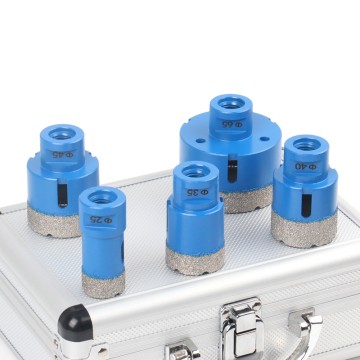
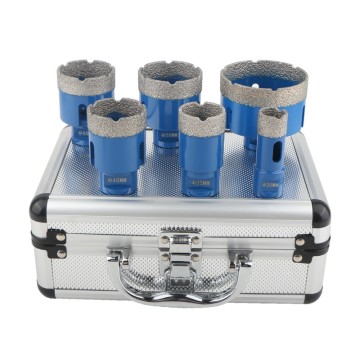
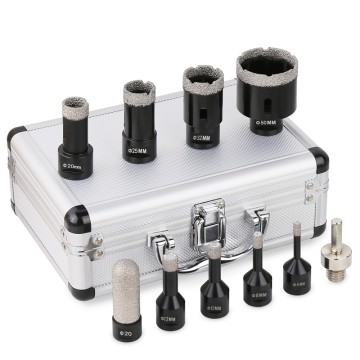
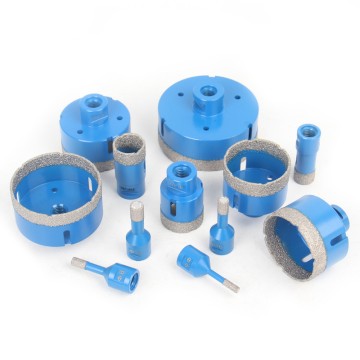
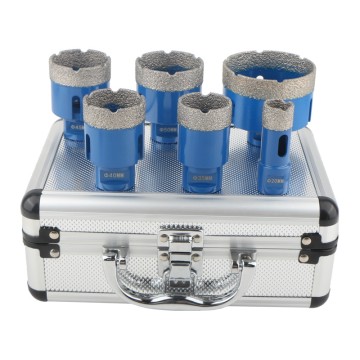
Discover our top-tier dry vacuum brazed diamond hole saws, engineered to meet the stringent demands of Japanese manufacturing, construction, and advanced engineering sectors.
Japan stands internationally recognized as a global titan in precision engineering, advanced manufacturing, and industrial innovation. The nation's industrial framework—spanning from the automotive hubs in the Chubu region (Aichi/Toyota) to the heavy machinery and shipbuilding docks in the Kansai region (Osaka/Kobe)—relies heavily on uncompromising tool quality. The saw steel product market in Japan is characterized by its strict adherence to the Japanese Industrial Standards (JIS), demanding cutting tools that offer exceptional durability, extreme heat resistance, and microscopic precision.
In this highly competitive ecosystem, high-speed steel (HSS), M42 bi-metal constructions, and Tungsten Carbide Tipped (TCT) hole saws form the absolute backbone of metalworking and fabrication. Japanese manufacturers do not simply look for cutting tools; they seek comprehensive hole-making solutions that reduce downtime on automated CNC lines, minimize material waste, and extend tool life even when processing high-tensile alloys and advanced composite materials. Consequently, international suppliers entering the Japanese market must demonstrate superior metallurgical engineering and consistent manufacturing tolerances.
Furthermore, the commercial status of saw steel suppliers in Japan has evolved. While domestic production of high-quality steel remains robust, Japanese industries increasingly collaborate with specialized global suppliers who can provide cost-effective, high-performance innovations. Technologies such as dry vacuum brazed diamond hole saws and advanced TCT annular cutters are heavily imported to supplement domestic supply chains, providing localized industries with the cutting-edge tools required to maintain their global competitive advantage. This dynamic creates a thriving market for specialized tool factories that can meet Japan's exacting standards.
The transition towards Industry 4.0 and smart manufacturing across Japan has fundamentally altered the tooling landscape. As factories become more automated and reliant on continuous, unmonitored production cycles, the demand for saw steel products with prolonged lifespans and predictable wear patterns has skyrocketed. Tool failure during an automated cycle is costly, driving the trend toward ultra-hard materials and advanced coatings. Suppliers must now provide hole saws and core bits that integrate seamlessly into high-speed, high-torque robotic drilling stations without compromising the structural integrity of the workpiece.
Another dominant trend is the rapid shift towards Dry Vacuum Brazed Diamond Technology. Traditionally, drilling through hard materials like concrete, ceramics, or reinforced glass required continuous water cooling to prevent thermal damage to both the tool and the material. However, in Japan's modern construction sites, cleanroom environments, and high-tech electronics manufacturing facilities, water management is often impractical or strictly prohibited due to contamination risks. Dry vacuum brazed diamond hole saws eliminate the need for water cooling, utilizing advanced brazing techniques that expose more diamond grit while maintaining a stronger bond to the steel core. This allows for faster, cleaner, and more efficient dry cutting.
Additionally, the automotive and aerospace sectors in Japan are aggressively pursuing "lightweighting" strategies to improve fuel efficiency and reduce carbon footprints. This involves the widespread adoption of Carbon Fiber Reinforced Polymers (CFRP), fiberglass, and ultra-high-strength steel alloys. Traditional bi-metal hole saws struggle with these highly abrasive materials, leading to rapid dulling and imprecise cuts. As a result, the market is seeing a massive surge in demand for specialized TCT carbide hole saws and diamond-coated core bits specifically engineered to shear through advanced composites without causing delamination or thermal degradation.
Advanced metallurgy ensuring tools withstand continuous operations in Japan's automated CNC environments.
Vacuum brazed diamond bits optimized for waterless, cleanroom, and high-tech drilling applications.
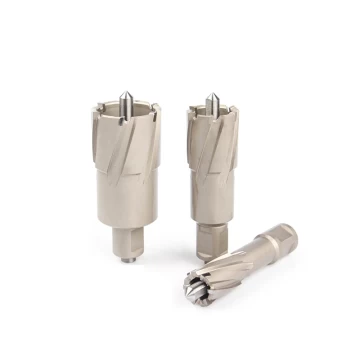
TCT and Diamond tools specifically designed for CFRP and high-tensile alloys used in Japanese aerospace.
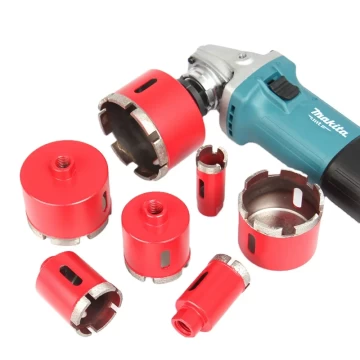
Japan's geographical location makes it highly susceptible to seismic activity, necessitating some of the strictest building codes in the world. In the Kanto region (encompassing Tokyo and Yokohama), the retrofitting of older buildings and the construction of new earthquake-resistant infrastructure is a continuous endeavor. This requires drilling through heavily reinforced, high-PSI concrete and thick rebar to install seismic dampers and structural reinforcements. Our M14 Diamond Core Bits and heavy-duty saw steel products are extensively utilized by Japanese contractors for these critical applications, providing the necessary torque and cutting power to penetrate mixed-density materials without fracturing the surrounding concrete matrix.
The Chubu region, particularly Aichi Prefecture, is the beating heart of Japan's automotive and robotics manufacturing. Here, precision is non-negotiable. The assembly of modern vehicles involves complex electrical routing, sensor installation, and lightweight chassis fabrication. Our HSS full grinding high-speed steel hole saws and TCT carbide hole saws are deployed in these localized scenarios to create perfectly chamfered, burr-free holes in sheet metal, aluminum, and advanced plastics. The reliability of these saw steel products ensures that automated robotic arms can perform thousands of repetitive drilling tasks with zero margin for error.
Cities like Kobe and Osaka have a rich history in shipbuilding and heavy maritime engineering. Constructing massive cargo vessels and naval architecture requires large-diameter hole making through thick structural steel plates for fire pipeline installations, HVAC routing, and electrical cabling. In these high-stress environments, TCT Annular Cutters and Magnetic Hole Saws are essential. They offer a faster, more efficient alternative to traditional twist drills by only cutting the periphery of the hole, ejecting a solid slug. This drastically reduces machining time and energy consumption, which is a critical localized application for Japan's bustling shipyards.
Maintaining Japan's world-renowned Shinkansen network demands tools that can operate under extreme conditions. The high-stress steel tracks and carriage chassis require regular maintenance, sensor upgrades, and structural testing. Specialized cobalt alloy broach drill bits and TCT annular cutters are used by railway maintenance crews to perform on-site, precision hole making. The portability and aggressive cutting geometry of these saw steel products allow Japanese engineers to execute rapid repairs during short nighttime maintenance windows, ensuring the uninterrupted operation of the nation's vital transit arteries.
Meeting the rigorous demands of Japanese industry requires a partner with deep expertise in metallurgy, advanced manufacturing capabilities, and a commitment to absolute quality. We bridge the gap between innovative tool engineering and the localized needs of Japan's high-tech sectors. Below is an introduction to our core manufacturing facility and our dedication to excellence.
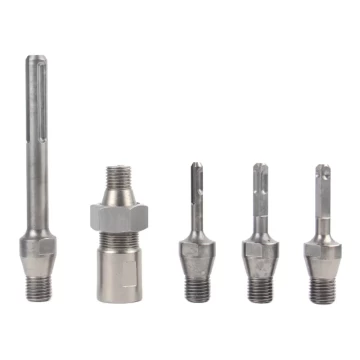
Explore our complete range of specialized saw steel products, diamond core bits, and TCT annular cutters, fully compatible with Japanese industrial machinery, angle grinders, and magnetic drills.